Understand the plant before you memorize the recipe.
Microgreens are young edible plants harvested after germination, usually when the cotyledons are fully open and the first true leaves are beginning to appear. Learn the basic biology and workflow first, then crop-specific methods make much more sense.
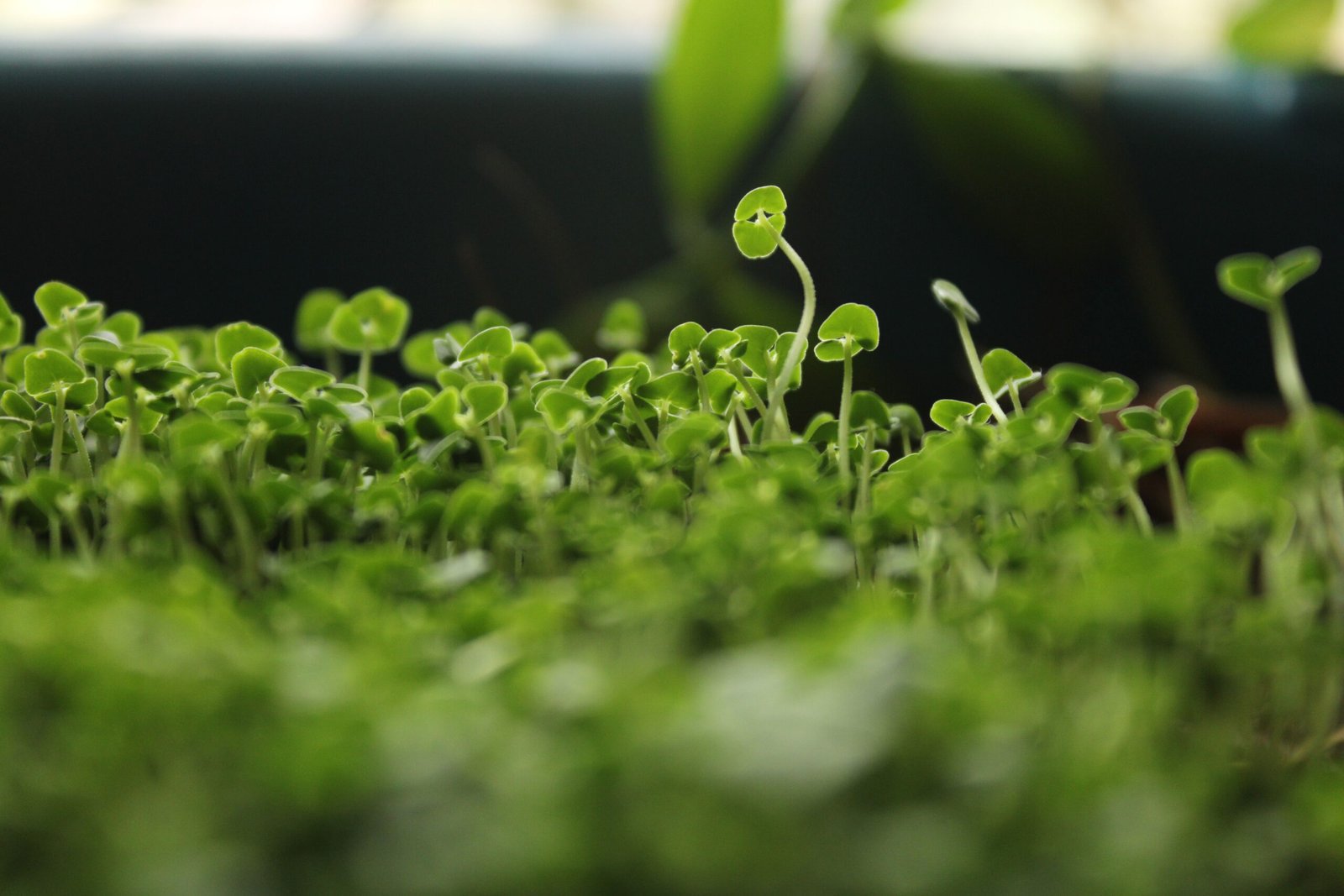
Microgreens, sprouts and baby greens are different stages.
They may begin with the same seed, but the growing method, harvest stage and edible portion are different.
| Stage | How it is grown | What is eaten |
|---|---|---|
| Sprouts | Usually germinated without soil, often in water and low light. | The whole sprout, including root and seed remnants. |
| Microgreens | Grown in a substrate or hydroponic support and moved into light after germination. | Stem and leaves cut above the growing medium. |
| Baby greens | Allowed to grow longer and larger than microgreens. | Larger leaves and stems, often with potential for regrowth depending on the crop. |
Know what you are looking at.
Most beginner confusion becomes easier when you can identify the early parts of the plant.
Root
Anchors the seedling and takes up water. Fine white root hairs can look like mold when seedlings first emerge.
Cotyledons
The first seed leaves. They provide much of the early visual canopy in a microgreens tray.
True leaves
The next leaves that begin to resemble the mature plant. Many microgreens are harvested as these start to appear.
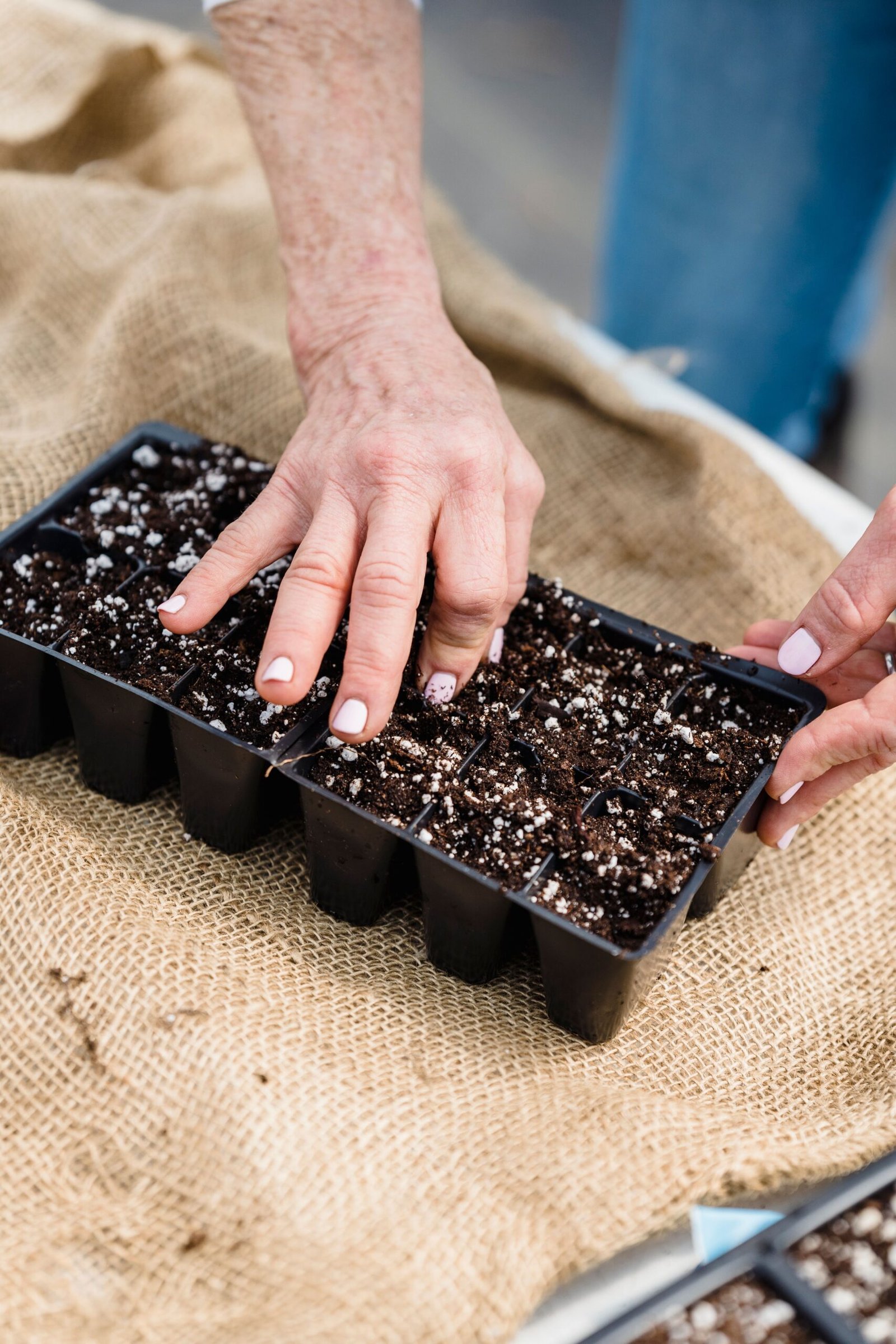
Seed. Germinate. Light. Water. Harvest.
Every crop varies, but the underlying process stays recognizable: sow evenly, maintain moisture through germination, move into useful light, manage water and airflow, then harvest cleanly.
Most tray problems trace back to a short list.
Instead of chasing hacks, learn what each variable changes.
Seed quality & density
Fresh, untreated seed and sensible sowing density influence germination, crowding and disease pressure.
Moisture
Media should stay moist enough for roots without remaining saturated for long periods.
Light
Even light helps prevent stretched, leaning seedlings and gives the canopy a more consistent shape.
Temperature & humidity
Room conditions affect germination speed, drying rate, condensation and disease pressure.
Airflow
Gentle circulation helps dense seedlings avoid stagnant, persistently wet conditions.
Sanitation
Reusable trays and harvest tools should be cleaned properly between grows.
Follow a progression instead of collecting random tips.
The Beginner Learning Path puts the fundamentals in a practical order, then the Crop Library shows how individual varieties change the workflow.