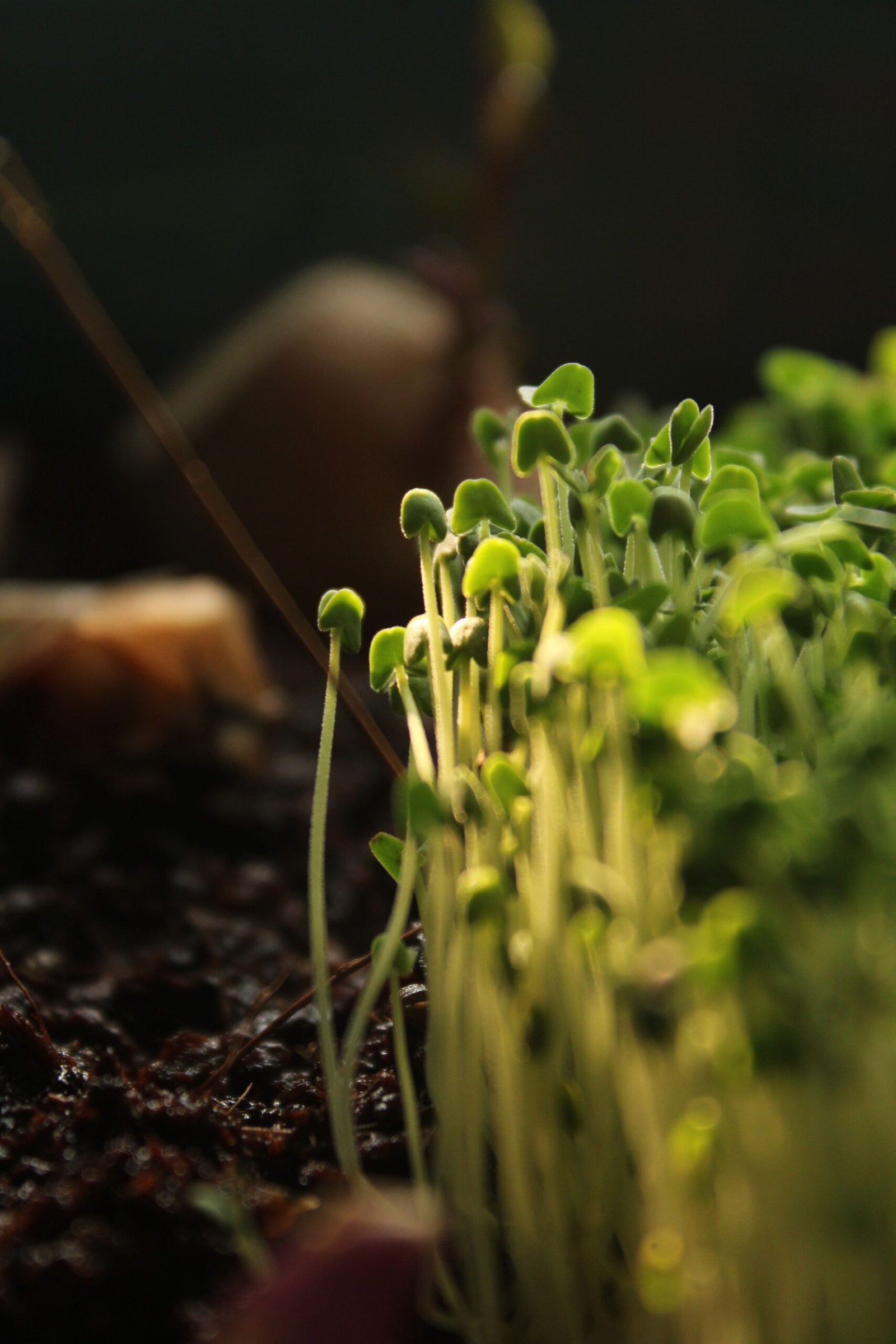
Microgreens and sprouts both begin with germinating seed, but they are different products with different growing methods, harvest stages and edible portions.
Sprouts are harvested earlier
Penn State Extension defines sprouts as seeds germinated after soaking, often in the dark, where the whole sprout is eaten—including the seedling, root and often what remains of the seed.
Microgreens are cut above the growing medium
Microgreens grow longer, usually until the cotyledons are fully developed and the first true leaves are emerging. They are normally grown in soil or another substrate and harvested by cutting the shoot above the growing medium.
| Sprouts | Microgreens | |
|---|---|---|
| Growing environment | Often water-based and dark. | Usually substrate-based with light after germination. |
| Harvest stage | Very early germination. | Cotyledons developed; early true leaves appearing. |
| What is eaten | Whole sprout including root/seed remnants. | Stem and leaves cut above the medium. |
| Typical cycle | Shorter. | Often about 7–21 days depending on species and conditions. |
Food-safety differences matter
Penn State’s food-safety guidance notes that sprouts are especially vulnerable because they are grown in warm, moist conditions and eaten with seed and roots attached. Microgreens have a different risk profile but are also commonly eaten raw, so clean water, seed sourcing, sanitation and careful handling still matter.
Next: see Microgreens Food Safety Basics or start your first tray.
Sources: Penn State Extension, “The ABCs of Microgreens” and “Ensuring Food Safety in Microgreens Production.”
Leave a Reply