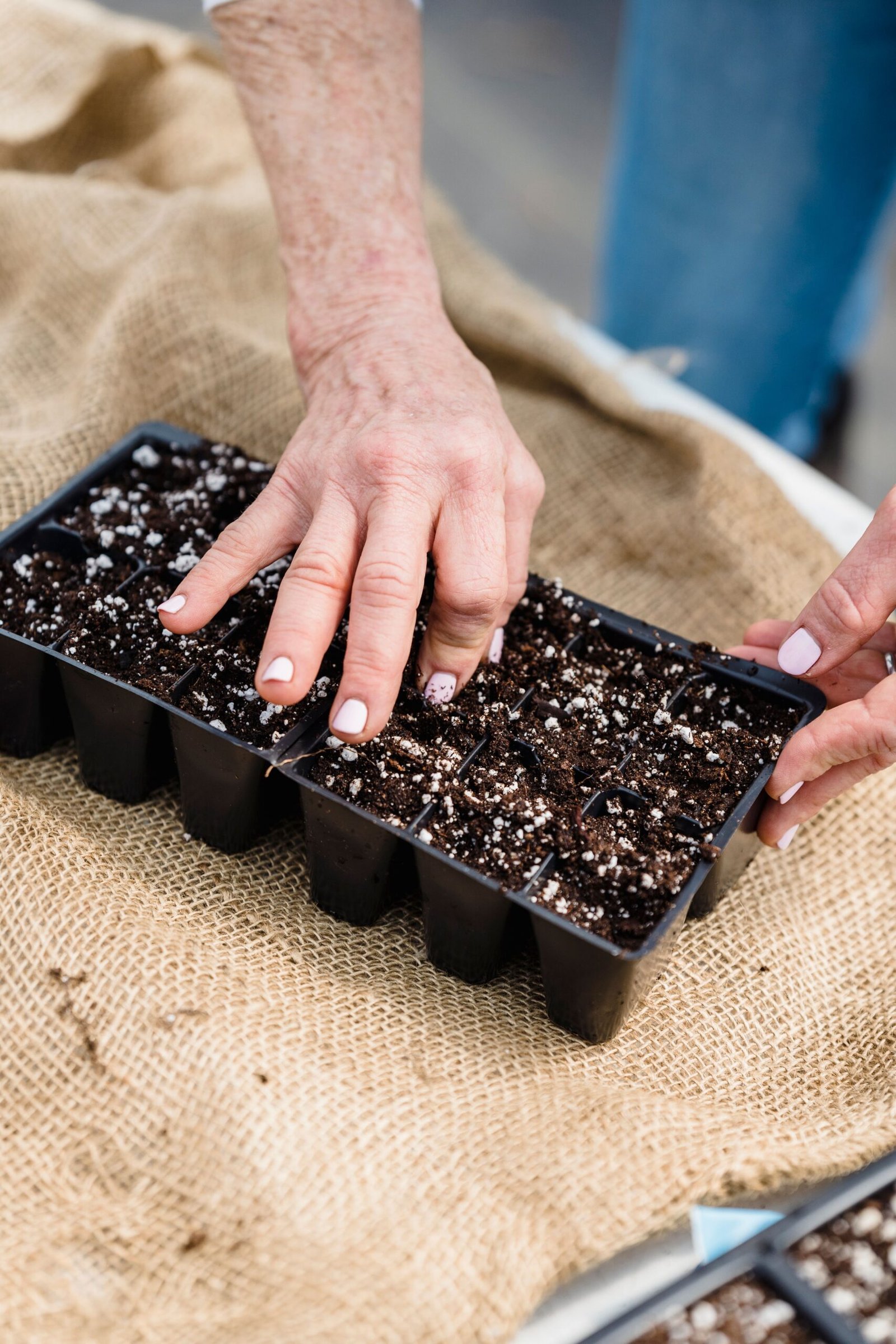
Placing a clean tray or light weight over germinating microgreens is a common technique, especially for larger-seeded crops. The goal is not to crush seedlings. It is to improve seed-to-media contact, hold moisture close to the seed and encourage a strong, even push upward.
Why pressure can help
Large seeds can lift away from the growing surface as roots emerge. Gentle, even pressure helps keep them in contact with moist media while roots anchor. It can also create a more level canopy when the tray is sown evenly.
Crops that commonly respond well
Peas and sunflower are frequent candidates. Some growers also use modest pressure for radish or other vigorous crops, but the need varies with seed size, media, tray depth and the grower’s germination method.
How to apply weight safely
- Use a clean tray that distributes pressure evenly.
- Keep the amount of weight modest and consistent from grow to grow.
- Check moisture so the media stays moist without becoming saturated.
- Remove pressure when seedlings have established and are clearly lifting the cover.
- Do not leave a struggling or excessively wet tray compressed simply because a schedule says to.
When not to use heavy pressure
Tiny or delicate seeds such as amaranth can be damaged or buried by an aggressive weighted setup. Mucilaginous crops also behave differently. Crop-specific needs should override a one-size-fits-all germination routine.
Pressure is different from blackout
Weighted germination and blackout are related but separate tools. Weight provides physical resistance and contact. Blackout limits light after germination to encourage additional stem elongation in crops where that is useful.
Next: see Microgreens Blackout Period for the difference between covered germination and post-germination blackout.
Sources: University of Maryland Extension; Penn State Extension; common commercial microgreen production practice.
Leave a Reply