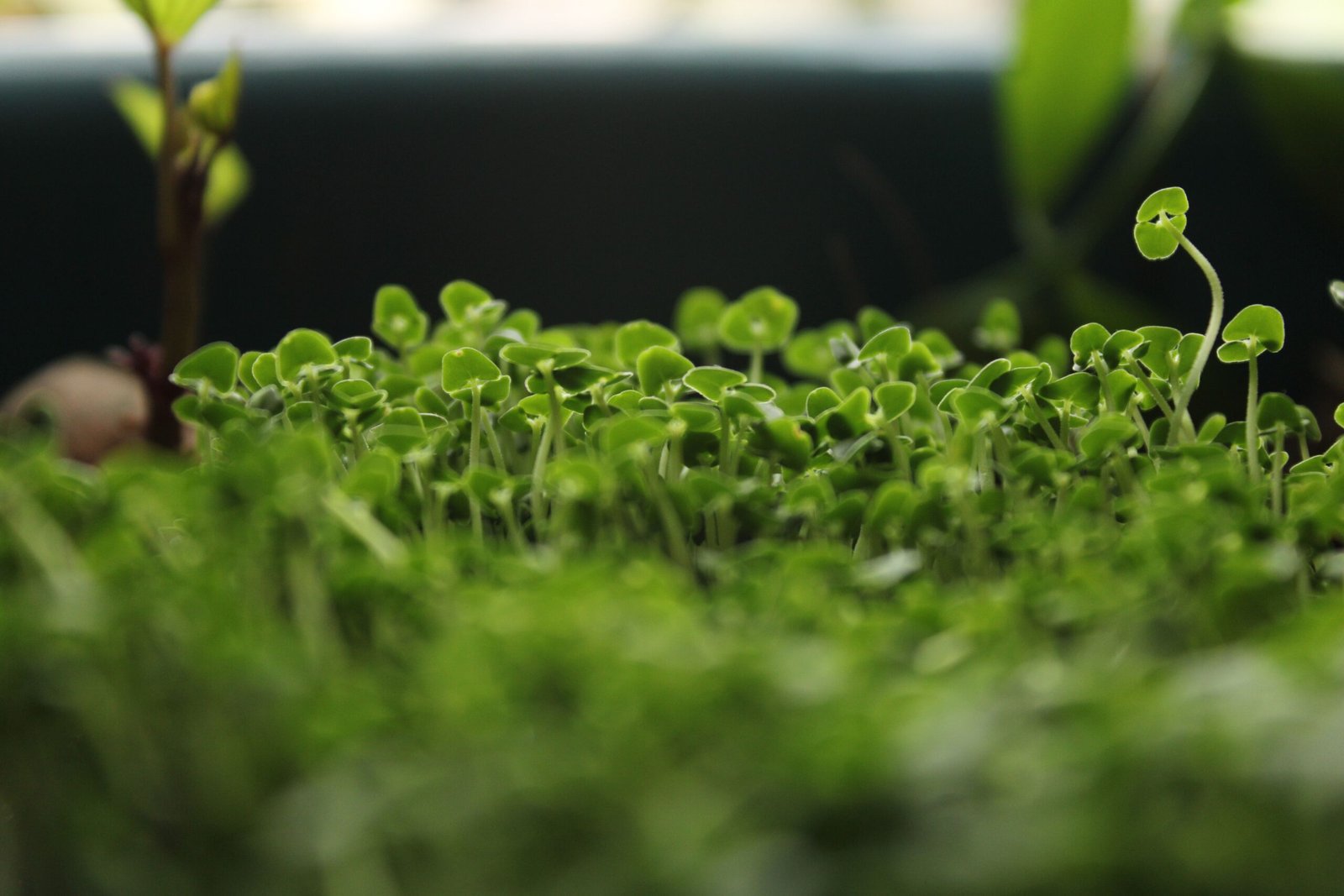
A blackout period is a stage when germinated microgreens are kept in darkness for additional time before being moved into normal growing light. Growers use it to encourage stem elongation and help create a taller harvestable canopy.
Blackout is not the same as initial germination cover
Many microgreens are covered during germination to hold moisture and create a stable environment. A blackout period usually refers to intentionally keeping already-germinated seedlings dark for additional time.
Why growers use blackout
Plants stretch toward light. Controlled darkness can encourage seedlings to elongate before they are exposed to light, which may make harvesting easier for certain crops.
Why you should not use one blackout schedule for everything
Different species germinate and develop at different rates. A method that produces a useful stem length in one crop can leave another weak, stretched or delayed. Watch the crop instead of blindly following one timetable.
Signs it is time to move into light
- The canopy has reached the height you want before greening.
- Seedlings are beginning to lift the cover strongly.
- Stems are elongating quickly and risk becoming weak.
- The crop-specific guide says the variety does not benefit from a longer blackout.
Do you need blackout for home growing?
Not always. Recent beginner discussions show that many home growers are unsure whether weighting, blackout, fertilizer and other “extras” are mandatory. They are not all universal requirements. Start with the simplest crop-appropriate process, then add techniques only when they solve a specific problem or improve a result you care about.
Leave a Reply