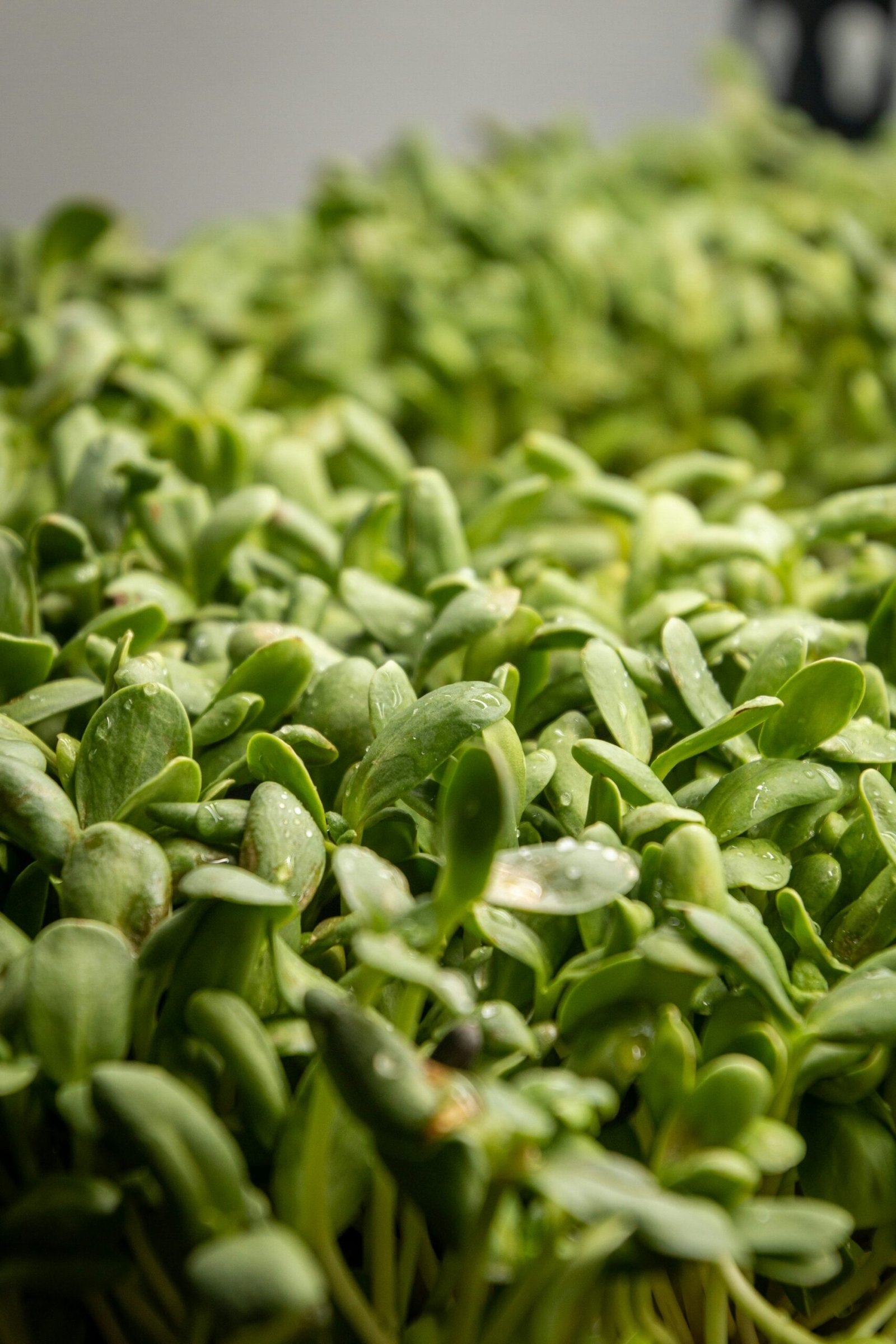
Sunflower microgreens are very different from tiny-seeded brassicas. The seed is large, the canopy is substantial, and learning sunflower gives you experience with soaking, heavier seed density and stubborn seed hulls.
Soak the seed first
University of Maryland Extension lists sunflower among the seeds that benefit from soaking before sowing. Their guidance gives a general soaking range of 6 to 12 hours for seeds such as sunflower and pea.
Use enough moisture without waterlogging
Large seeds need reliable moisture during germination, but the tray still needs drainage and air. Keep the medium evenly moist and avoid leaving standing water around the root zone.
Pressure and germination
Many growers use a cover or weighted tray during sunflower germination to improve seed-to-medium contact and encourage strong rooting. Check progress regularly; the goal is a vigorous rooted mat, not a compressed, overly wet tray.
Managing seed hulls
Sunflower hulls often remain attached as seedlings emerge. Maintaining appropriate humidity during germination can help hulls release, and gentle handling after emergence can remove loose hulls without damaging the crop.
Light and harvest
Once the crop moves into light, watch for an even green canopy and sturdy stems. Harvest when the leaves and texture fit your preference rather than relying only on a day count.
Common sunflower problems
- Uneven germination from inconsistent soaking or moisture.
- Hull retention when the germination environment dries too quickly.
- Wet pockets where large seeds are crowded.
- Weak stems from delayed or uneven light.
Next: compare sunflower with pea shoots, another large-seeded crop with a strong canopy.
Source reference: University of Maryland Extension, “Growing Microgreens and Baby Greens Indoors.”
Leave a Reply