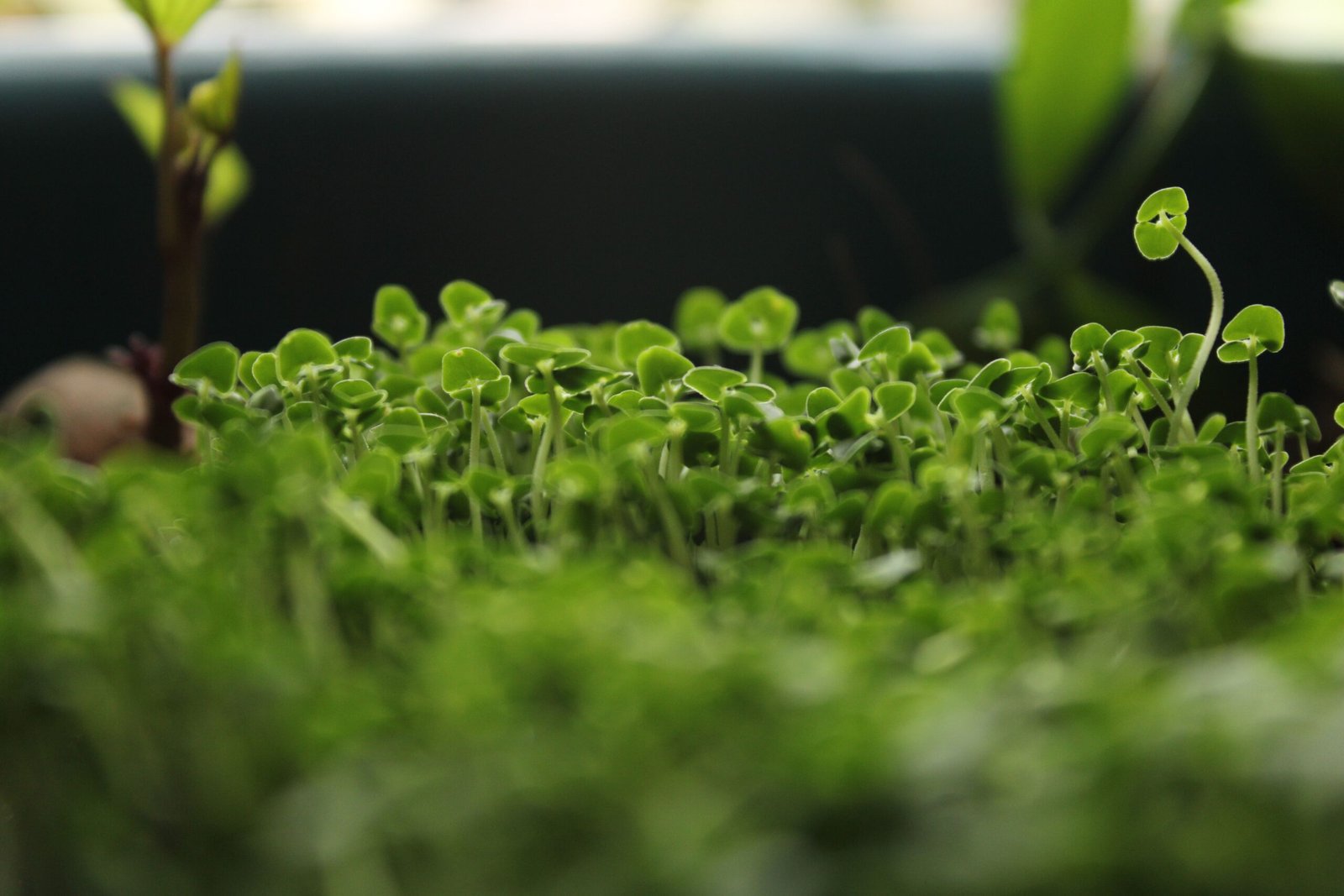
Radish is a fast, vigorous microgreen with a peppery flavor and an easy-to-read canopy. It is especially useful for beginners because mistakes in moisture, light or sowing density show up quickly.
Why radish is beginner-friendly
Radish is part of the brassica family. Penn State Extension identifies brassicas as some of the shortest-cycle microgreens, and radish is widely used as a fast benchmark crop.
Sow evenly
Prepare a level, evenly moist growing surface and distribute seed across the tray without heavy piles. Good seed-to-medium contact helps the tray germinate more uniformly.
Germination and blackout
Cover during germination to hold moisture. Some growers use a short blackout after emergence to increase stem length, but treat blackout as a technique rather than a mandatory step. Move into light before seedlings become excessively stretched.
Light, water and airflow
- Give the canopy reasonably even light.
- Use bottom watering once roots are well established.
- Keep the medium moist, not saturated.
- Maintain gentle circulation around the dense canopy.
Harvest
Cut above the growing medium with clean, sharp tools when the crop reaches the stage and texture you want. A young, vigorous radish tray can move from germination to harvest quickly compared with slower herbs.
What radish teaches you
Radish is useful for learning how even sowing affects canopy uniformity, how light changes stem shape, and how quickly a dense tray can shift from moist to too wet.
Next: try broccoli for a milder fast brassica, or mustard for an even bolder flavor.
Source references: University of Maryland Extension, “Growing Microgreens and Baby Greens Indoors”; Penn State Extension, “The ABCs of Microgreens.”
Leave a Reply