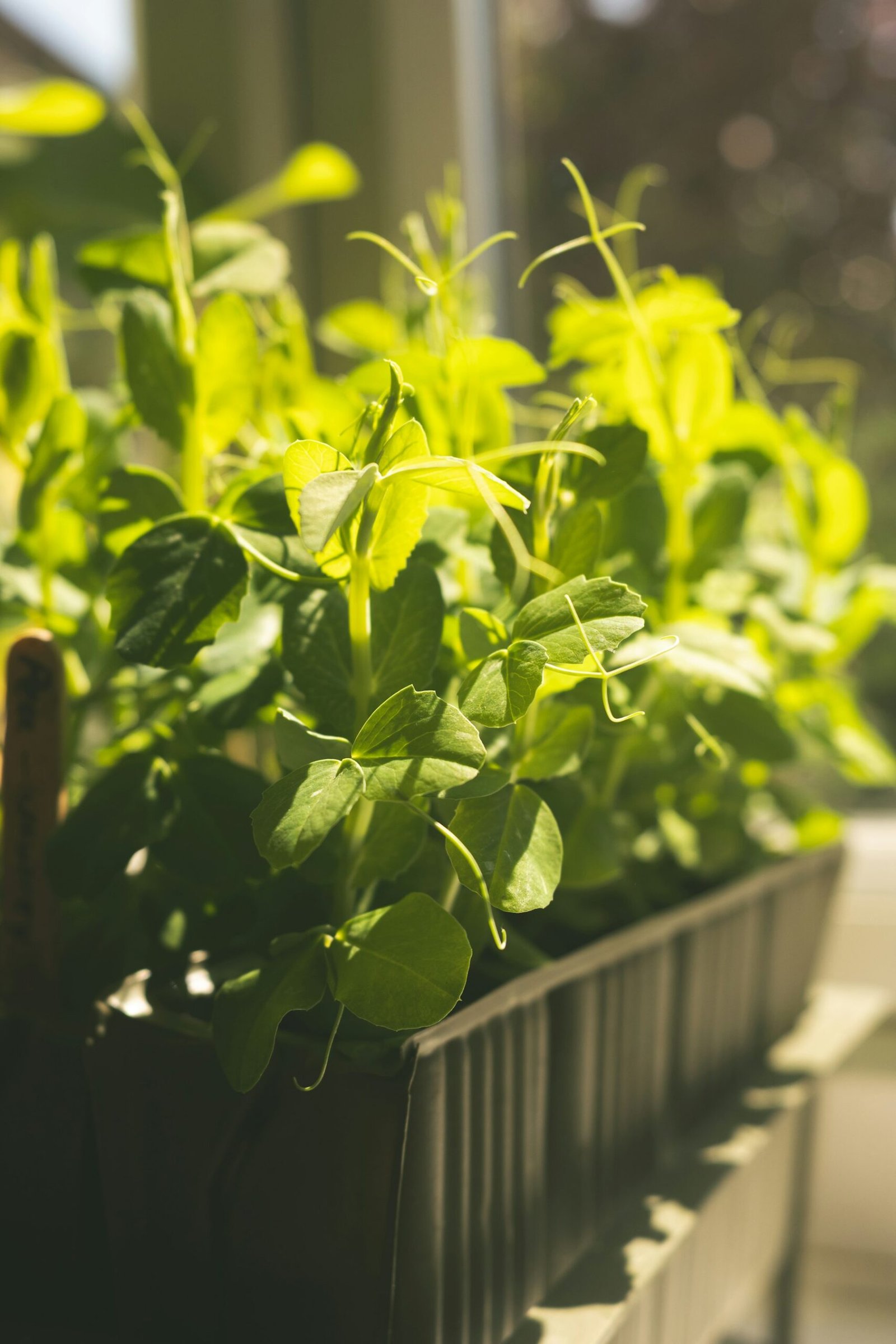
Pea shoots are a useful step beyond small-seeded microgreens. The seed is large, the root system is strong, and the crop develops a substantial canopy that behaves differently from broccoli or radish.
Soak peas before sowing
University of Maryland Extension lists pea among seeds that benefit from soaking for roughly 6 to 12 hours before sowing. Soaking helps hydrate the large seed before it enters the tray.
Give large seeds good contact
Spread soaked seed across an even growing surface and press it into reliable contact with the medium. Large seed takes more physical space than brassica seed, so uniform distribution is especially important.
Germination
Use a cover or weighted tray as appropriate to hold moisture and encourage rooting. Check the tray regularly so the germination environment stays moist without becoming stagnant.
Light and airflow
Move into light when the crop has established. Pea shoots can create a thick canopy, so air movement becomes increasingly important as leaves and tendrils fill the tray.
Watering
Once roots are established, bottom watering helps move moisture through the tray without repeatedly wetting the foliage. Use the weight and feel of the tray to learn its actual demand.
Harvest
Harvest when the shoots reach the texture and height you prefer. Because pea shoots are a larger crop, the ideal harvest can be influenced by whether you want tender young shoots or a more substantial bite.
Next: see sunflower microgreens for another large-seeded workflow.
Source reference: University of Maryland Extension, “Growing Microgreens and Baby Greens Indoors.”
Leave a Reply