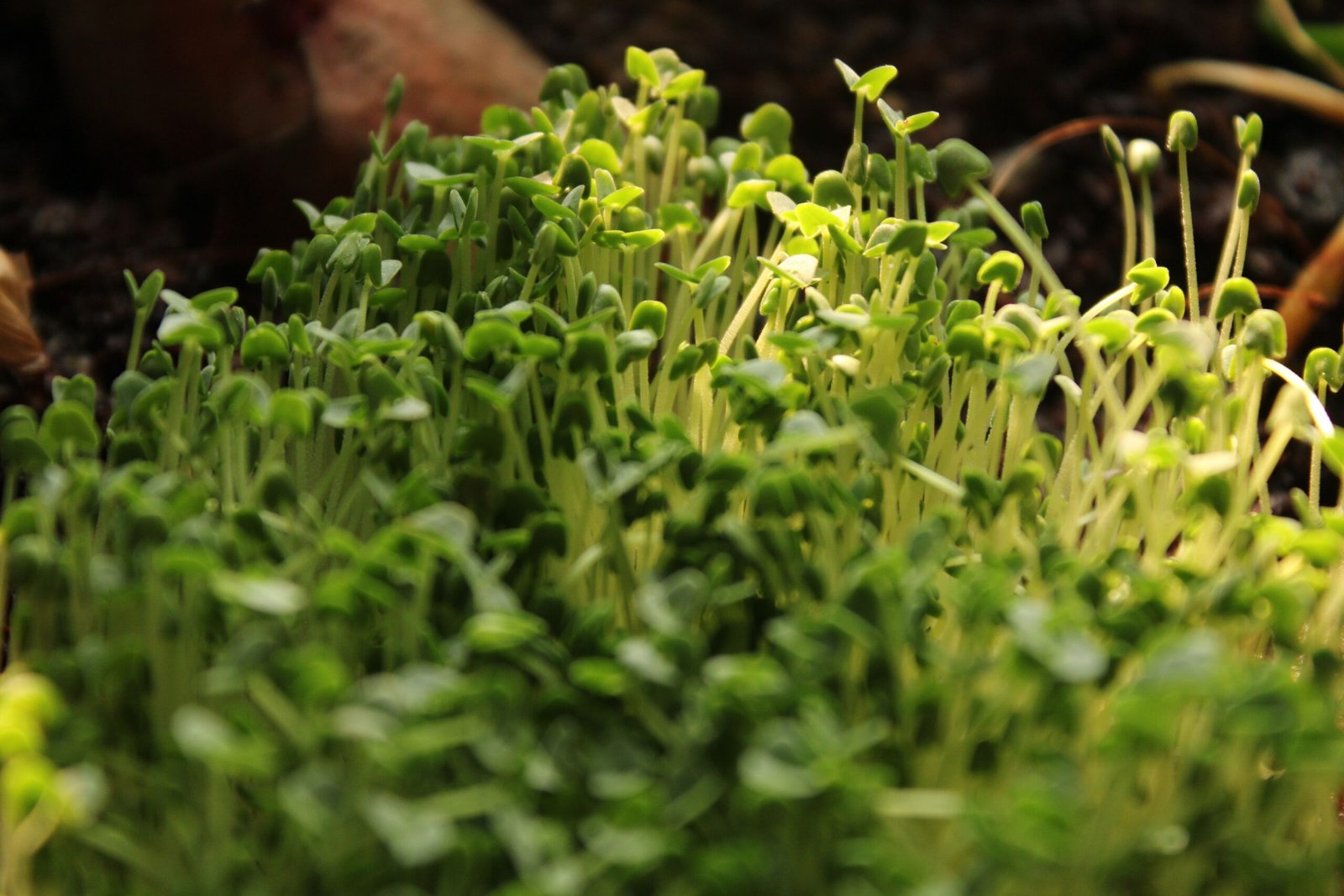
Red cabbage is a fast brassica that adds color to the tray while keeping a familiar beginner-friendly growing workflow. It is a good crop for learning how light influences canopy color and how even sowing affects presentation.
Use the standard small-seed brassica workflow
Prepare shallow, evenly moist growing media, broadcast seed uniformly and press it into contact with the surface. Avoid dense clumps that hold too much moisture.
Germination
Cover during germination and check frequently because cabbage-family crops can germinate rapidly under warm indoor conditions. Keep the medium moist rather than saturated.
Light brings out the crop
Move the tray into useful light before seedlings become excessively stretched. Even light helps the canopy develop more uniformly and makes the crop’s color contrast more noticeable.
Water from below once roots establish
Bottom watering is useful once roots can wick moisture through the tray. Check the corners and edges as well as the center so dry zones do not develop unnoticed.
Harvest
Harvest when cotyledons are open and early true leaves are emerging. Penn State Extension describes brassicas as among the shortest-cycle microgreens, while overall harvest timing still varies with conditions and the stage you prefer.
Next: compare red cabbage with broccoli or mustard.
Source references: University of Maryland Extension, “Growing Microgreens and Baby Greens Indoors”; Penn State Extension, “The ABCs of Microgreens.”
Leave a Reply