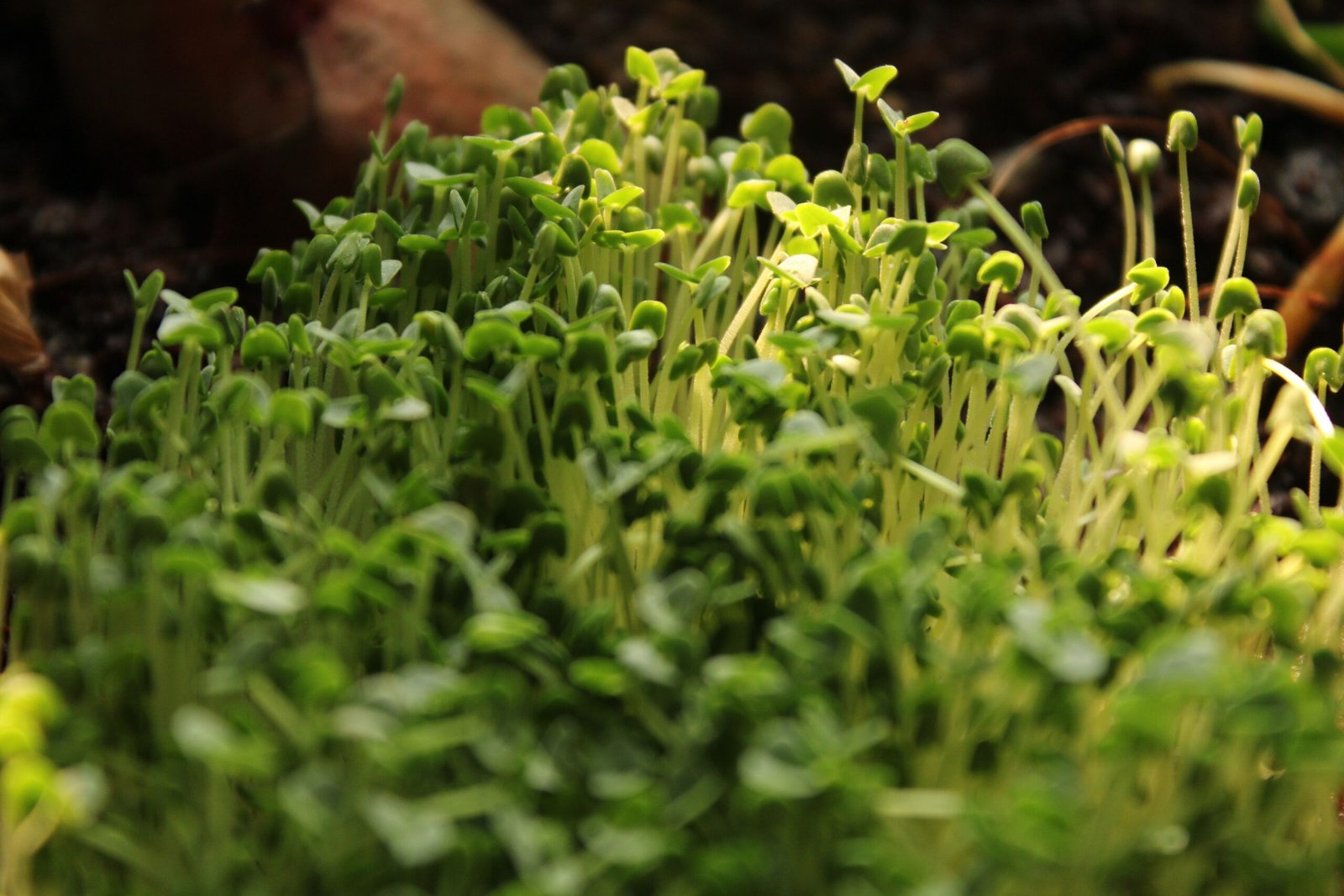
Amaranth is one of the more visually striking microgreens, but it is also more delicate than fast brassicas. The seed is tiny, the stems are fine, and the crop rewards careful moisture management and gentle handling.
Expect a slower, more delicate crop
Virginia Tech lists amaranth at roughly 10–17 days from sowing to harvest, while Mississippi State groups red amaranth among slower crops that can take 16–25 days. The difference is a good reminder that variety and growing conditions matter.
Sow lightly and evenly
Amaranth seed is very small. Spread it evenly across a level, pre-moistened surface and avoid heavy clumps. Dense piles are harder to keep evenly moist and can create weak pockets in the canopy.
Use only a light cover if the crop needs it
University of Florida guidance places amaranth among crops that benefit from a light cover rather than a heavy layer of media. The goal is good moisture contact without burying the tiny seed deeply.
Moisture needs a lighter touch
Fine seedlings can be stressed by both drying and excessive saturation. Keep the surface consistently moist during germination, then transition carefully to bottom watering as roots establish.
Light and airflow
Move into even light once the crop is established. Because amaranth stems are fine, avoid aggressive fan airflow. Gentle circulation around the growing area is enough.
Harvest
Harvest based on canopy development and tenderness rather than one exact day. Use clean, sharp scissors and handle the harvested crop carefully because the stems and leaves are more delicate than sunflower or pea shoots.
Amaranth is a useful “next crop”
It is better as a second-stage learning crop than as your very first tray. Once you understand moisture and light with a forgiving brassica, amaranth teaches finer control and rewards you with strong color.
Next: compare it with the other crops in the Crop Library.
Sources: Virginia Cooperative Extension / Virginia Tech; Mississippi State University Extension; University of Florida IFAS.
Leave a Reply